The Sweet Legacy of Denver’s Keebler Cookie Plant
For decades, the north side of Denver had a smell all its own—warm, sweet, and unmistakable. It wasn’t just in the air; it was in the memory of anyone who grew up near I-70 and Pecos. That aroma came from the Keebler cookie plant, a factory that helped put Denver on the map for snack lovers while leaving behind a legacy that still sparks nostalgia today.
The Beginning
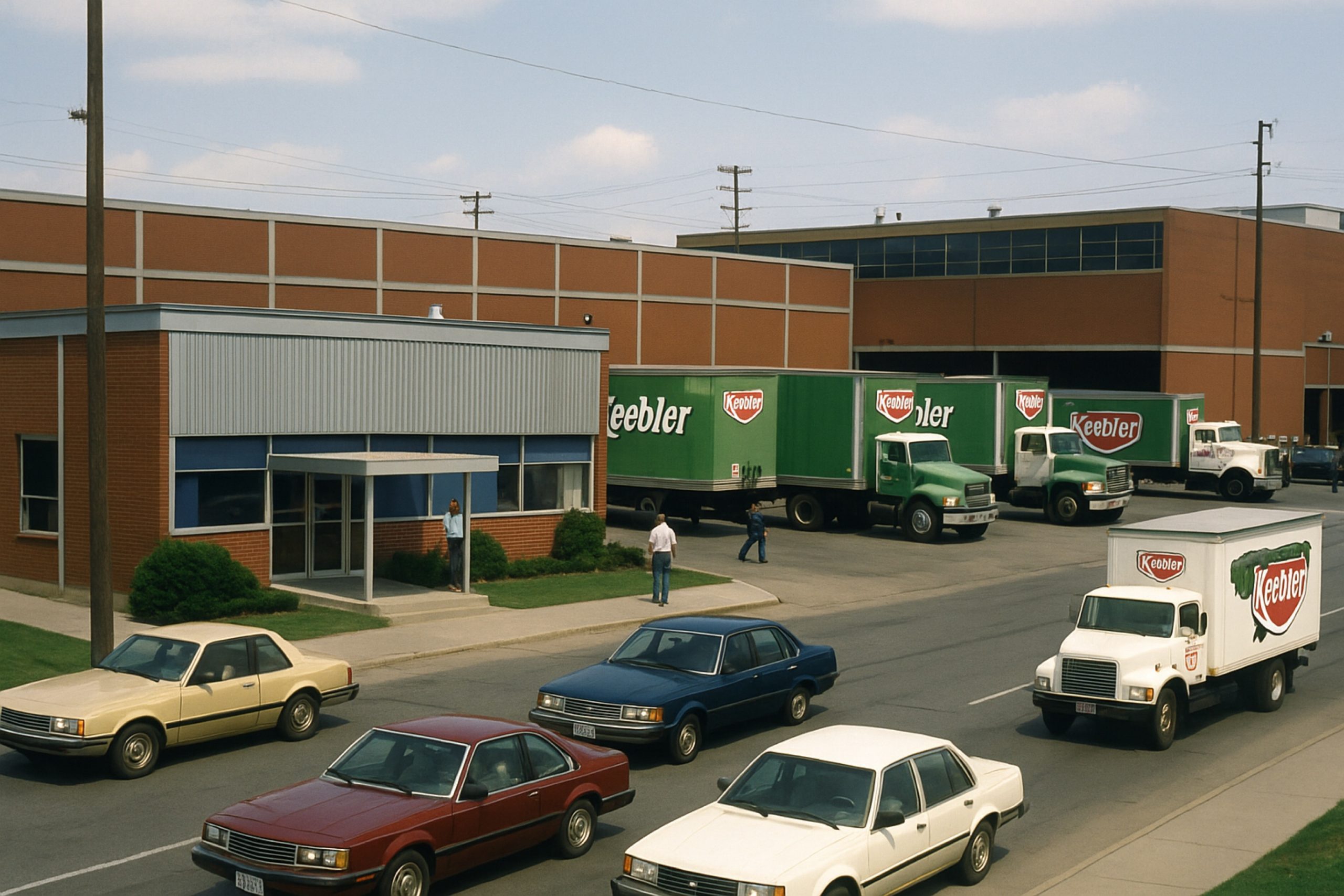
The Keebler plant opened in north Denver in the 1960s, part of the brand’s expansion beyond its Chicago roots. Situated right off I-70 at Pecos, the plant was perfectly placed for both production and distribution. With semi-trucks constantly rolling in and out, the facility became a hub of cookie-making for the Rocky Mountain region.
Cookies in the Air
What most locals remember isn’t just the factory itself—it’s the smell. When the ovens were running, the aroma of baking cookies would drift across neighborhoods, parks, and schoolyards. Drivers along I-70 often rolled down their windows to catch a whiff of fudge, shortbread, or chocolate chip. For kids in north Denver, the Keebler smell was as much a part of growing up as playgrounds and Broncos games.
The Heyday
During the 1970s and 1980s, the Denver Keebler plant was at full tilt, producing classics like Fudge Stripes, E.L. Fudge, Vienna Fingers, and Chips Deluxe. Workers spoke of busy shifts, conveyor belts stacked with fresh cookies, and the pride of helping fuel America’s sweet tooth. For the community, it was more than a workplace—it was a landmark. Everyone knew someone who worked there, and many families had stories tied to the factory.
The Decline and Closure
Like many U.S. factories, the Keebler plant eventually faced consolidation. By the late 1990s and early 2000s, production slowed as parent companies shifted manufacturing to larger, centralized facilities. When the Denver plant finally closed its doors, it marked the end of an era for north Denver. Jobs were lost, and the once-constant smell of cookies disappeared from the breeze.
The Legacy
Though the ovens have long gone cold, the Keebler plant lives on in memory. For Denverites who grew up in its shadow, the smell of cookies is a time machine back to their childhoods. Ask anyone who lived nearby, and they’ll tell you about rolling down the car windows on I-70 just to breathe it in.
The Keebler cookie plant may be gone, but in north Denver, it remains a piece of local history—proof that sometimes a factory can shape a community, not just with jobs, but with something as simple, and as powerful, as the smell of cookies in the air.