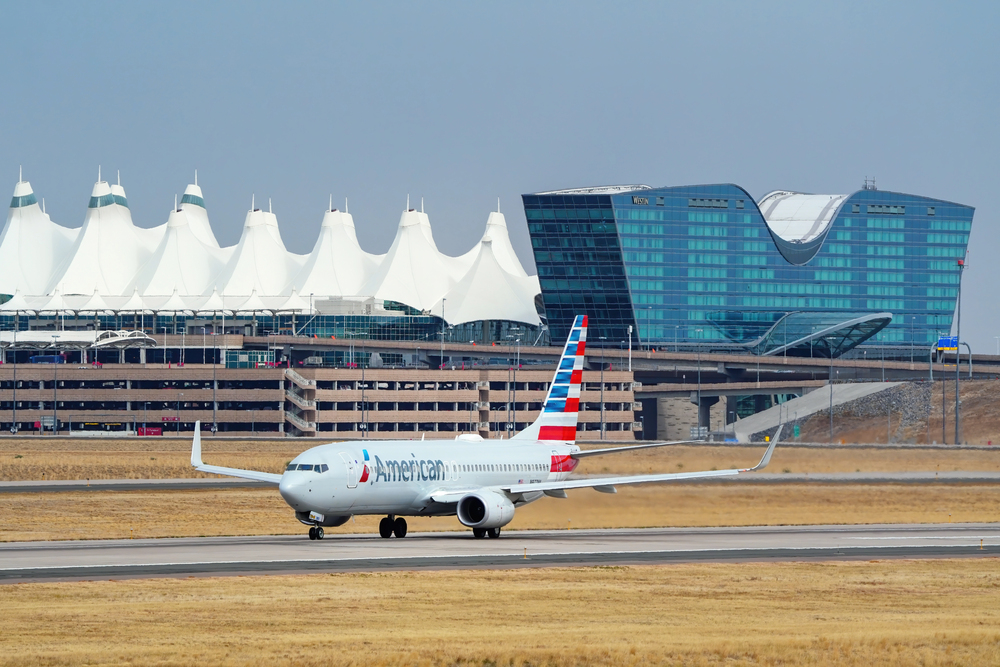
How a Bar Napkin Sketch Became DIA’s Iconic White “Tents”
Anyone who’s flown through Denver International Airport knows its unforgettable silhouette — the white, peak-shaped roof that glows in the sun and mimics the Rockies on the horizon. That landmark design didn’t come from a boardroom or a giant architectural studio. It started with two architects, Curtis Fentress and the late Jim Bradburn, sitting at the bar in Denver’s Warwick Hotel with a sketchpad and a tight deadline.
Their firm had just been brought in after DIA’s original architects were fired for budget overruns. Tasked with cutting costs and reimagining the central terminal, Fentress and Bradburn started trading ideas over drinks. Fentress focused on capturing Denver’s mountain identity and brilliant sunlight, while Bradburn translated those concepts into workable technical solutions.
The tent-like roof wasn’t just about aesthetics — it was a budget rescue. The previous steel-and-glass ziggurat design was massively expensive and would’ve required heavy structural systems. By relocating the mechanical equipment underground and switching to a fabric roof supported by cables, the pair drastically reduced costs and construction time while producing something visually iconic.
Convincing officials was another challenge. Fabric roofs were still unfamiliar in the early ’90s, and skepticism ran high, especially after infamous failures like the Pontiac Silverdome collapse. But the material they proposed — Teflon-coated fiberglass developed during the Cold War to cover radar installations — was unbelievably durable and shed snow like a nonstick pan. Three decades later, it’s still holding strong, with only a minor tear ever reported.
The light-filled Great Hall was born from Denver’s own environment, filtering the city’s famously intense high-altitude sunlight into the space below. When the airport opened in 1995, the world took notice. The design catapulted Fentress Architects onto the international stage, leading to major projects in Bangkok, South Korea, and beyond.
Today, Fentress says he still feels a rush when he sees the roof glowing at sunrise or watches passengers press their faces to the window as they land, captivated by a structure born from a simple sketch, a shared vision — and a bar-top brainstorming session.