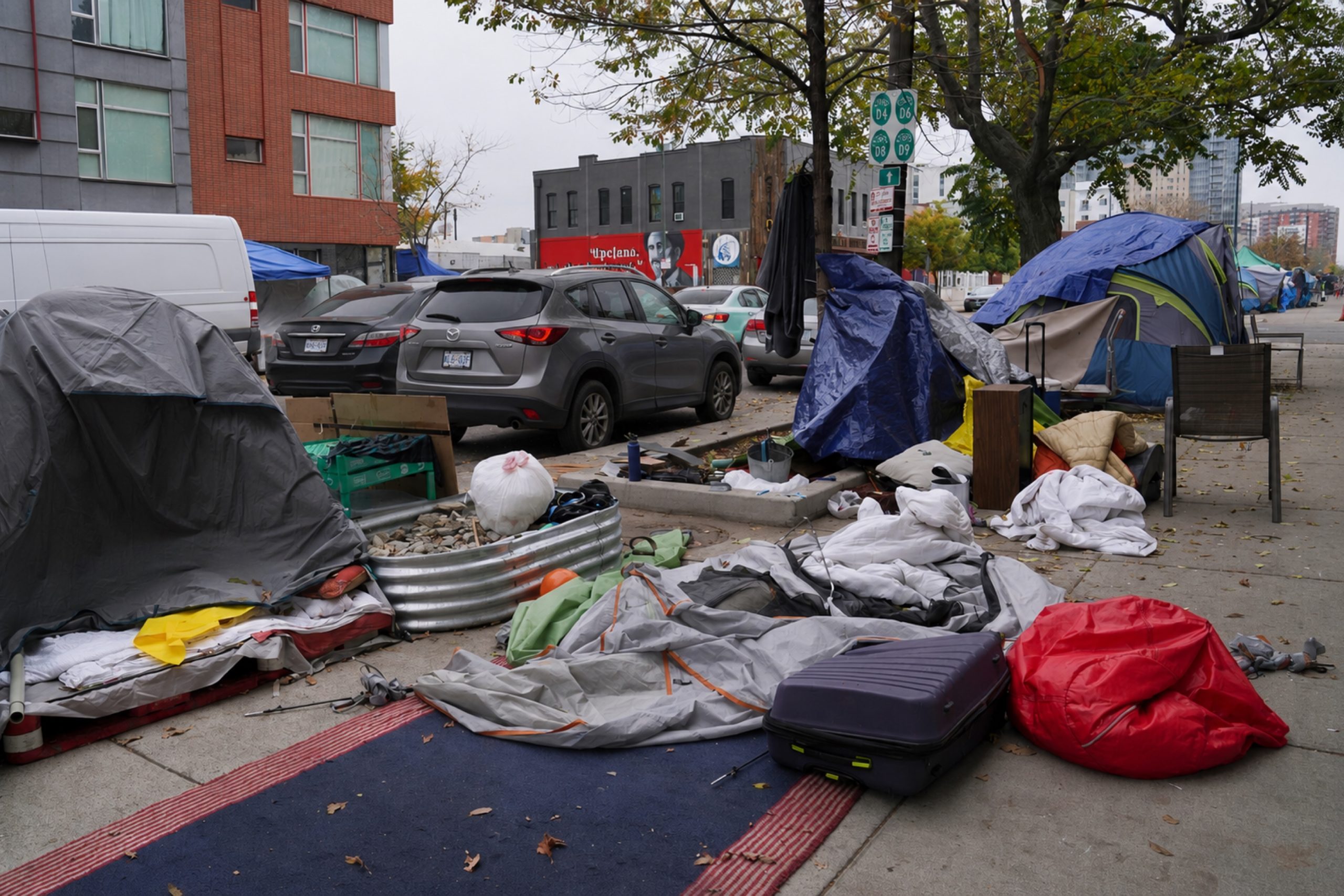
Opinion: Understanding and De-Escalating Conflict With Denver’s Homeless Population
A growing number of Denver residents and business owners are struggling with tense encounters involving people experiencing homelessness. Experts say those situations are often rooted not in hostility, but in trauma.
Former homeless shelter director Ryan Dowd, who trains organizations on de-escalation techniques, says nearly half of people experiencing chronic homelessness suffer from PTSD. Trauma, combined with the stress of living unsheltered, can trigger fight-or-flight responses that make people appear aggressive or reactive under pressure.
Research shows homeless individuals are far more likely to be victims of violence than perpetrators. Constant instability, including sweeps that result in lost belongings, food insecurity, lack of sleep, public scrutiny, and untreated mental health challenges, can intensify emotional stress and defensive behavior.
Dowd says body language and tone matter during difficult interactions. Confrontational gestures, yelling, or humiliation can escalate situations, while calm communication and non-threatening behavior are more effective. Denver’s Department of Housing Stability also recommends trauma-informed, low-conflict approaches that focus on listening and de-escalation.
As homelessness continues to rise across Denver, advocates argue that understanding the role trauma plays in public behavior is key to reducing conflict and improving safety for everyone.